
In the famous American Psycho boardroom scene, a simple business card is used to judge a person’s success, and clients often judge a real estate agent’s card in much the same way.
The best real estate business cards instantly build trust by combining a clean layout, high-quality paper, and clear contact details. To make a strong first impression, you should avoid overcrowded designs, hard-to-read fonts, and flimsy materials that can unintentionally hurt your brand instead of supporting it.
Contents
What Makes a Real Estate Business Card Worth Keeping
As a real estate professional, you are constantly juggling showings, client calls, and closing negotiations. You simply don’t have the time to worry about whether your marketing materials are pulling their weight.
Sadly, it is a common story: an agent invests in glossy, dark-coloured cards, only to find clients throw them away because there’s no room to jot down an appointment time. Or the paper is too thin, and the card bends in the pockets and ultimately ends up in the trash. Meanwhile, a well-designed card keeps working long after you hand it over. For example, an open house visitor may scan the QR code on the back of your card months later when they’re ready to buy.
The benefits of a great business card for realtors reach far beyond a way to share your contact info; it actively supports your success, reduces friction for your clients, and gives you peace of mind.
Real Estate Business Card Standards: The “Do’s”
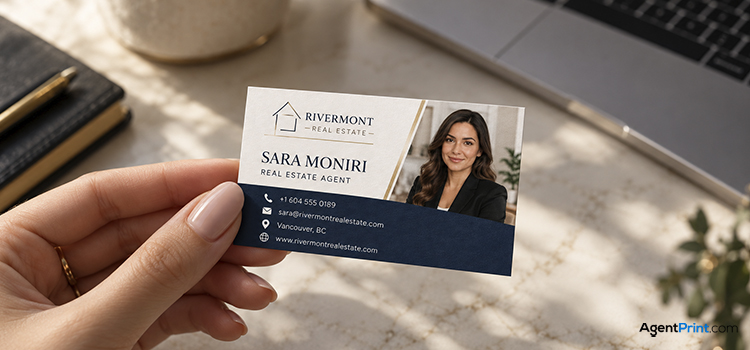
Business cards are a vital tool in real estate. To ensure yours works as hard as you do, prioritize these elements while designing a business card:
- Essential Contact Information: A stunning card won’t close a deal if a buyer can’t figure out how to reach you. Keep it simple and prioritize the exact ways you want clients to connect. Include your name, job title, cell phone number, email, and website.
- Licensing and Brokerage Details: Establishing trust is your top priority. Make sure your brokerage logo, license type, and registration number are clearly visible to meet both legal requirements and client expectations.
- Thoughtful Typography: If a single font choice could silence the boardroom in that famous movie, it’s worth choosing yours carefully. Keep your name and primary details at 10-12pt or larger so they are immediately readable. Never drop your body text below 7pt, and avoid overly decorative fonts for phone numbers and emails.
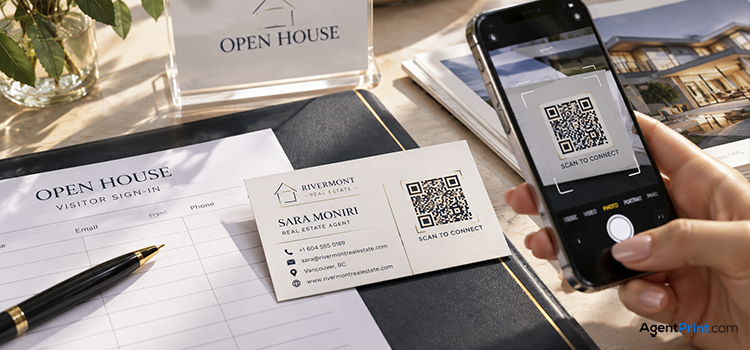
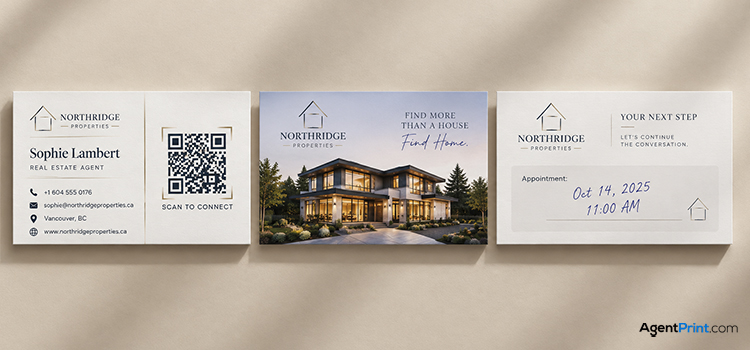
- Give the Back a Purpose: Don’t waste half of your valuable real estate. Use the back of your card to solve a problem or offer value. Add a QR code linking to your active listings, feature a high-quality property photo, or leave a clean, matte space to write down upcoming viewing times.
- Invest in Quality Paper: The physical weight of your card signals your reliability before your clients even read your name. We recommend a minimum of 14pt stock so your card feels substantial, or you could opt for an 18pt stock for a more premium feel.
- Bleed and Safe Zones: To prevent your vital information from getting accidentally sliced off during production, keep everything a comfortable margin away from the edge of the card. If your design includes a background colour or photo, make sure to stretch it past the cutting line into the “bleed” area, so that your cards will have an edge-to-edge finish without any awkward white borders.
- Aim for Perfect Print Clarity: Always set your design for CMYK colour mode for predicted printed colours. For photography, use high-resolution raster images set to 300 DPI, and for your logo and simple graphics, use vector files, as non-vector files cannot be edited by designers if a quick fix is needed.
Read More: Real Estate Business Card Design Guide
Business Card Mistakes to Avoid: The “Don’ts”
A business card that misses the mark can actually cost you potential clients. Avoid these common missteps to ensure your brand always looks its best:
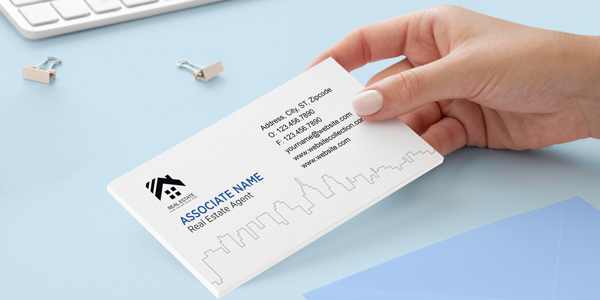
- Overcrowded Layouts: Don’t treat your business card like a mini-brochure. If you try to squeeze in four different social media handles, a long list of services, and a lengthy mission statement, the card becomes unreadable. Embrace white space; it gives your clients’ eyes a place to rest and draws attention to what matters most.
- Flimsy Paper Stock: A flimsy card unintentionally signals a low-budget operation. If the card flexes noticeably when you hold one corner, it’s too light. Your card should feel as solid as the service you provide.
- Irrelevant Shapes and Sizes: Being unique is great, but strange shapes or oversized cards won’t fit comfortably in a standard wallet or pocket. If clients can’t easily carry it, they will throw it away. Stick to the standard 3.5″ x 2″ (or 90mm x 55mm) sizing so it naturally fits into their day.
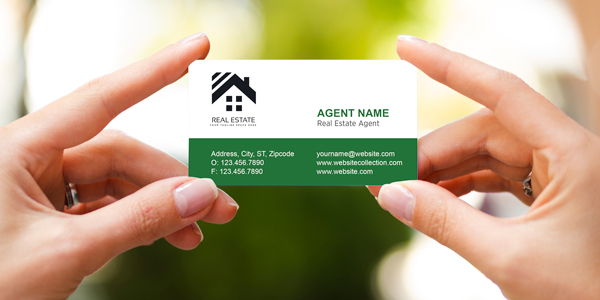
- Harsh or Clashing Colours: While you want your card to stand out, using neon shades, too many competing colours, or eye-straining combinations (like red text on a black background) can look unprofessional. Keep it clean and readable by sticking to a simple, balanced palette (one main brand colour, a high-contrast colour for your text, and a subtle accent), so your card feels as polished and approachable as you are.
- Low-Quality Images and Typos: Avoid using generic, low-resolution stock photos of houses. If you use a photo, ensure it’s a high-res professional headshot or a premium shot of a local property. Most importantly, double-check for typos; a misspelled email address or a missing digit in your phone number can cost you a valuable lead.

Final Words
A great real estate business card doesn’t need to win a boardroom showdown. It just needs to look sharp, feel substantial, and make it easy for clients to reach you.
At AgentPrint.com, we understand the heavy demands of your schedule, and we’re here to make your marketing completely stress-free. Whether you know exactly what you want or need a little guidance, we have you covered. Shop our premium Real Estate Business Cards today, or hire our expert design team to create a custom look that does the heavy lifting for you.
Frequently Asked Questions
What information must be on a real estate business card?
Your card should clearly display your name, job title, brokerage name/logo, phone number, email address, and website. Be sure to check your local real estate board’s requirements, as you may also need to include your license number and specific brokerage details.
What is the best paper thickness for a real estate business card?
We recommend a minimum thickness of 14pt to 18pt. Cards in this range feel substantial, professional, and hold up well to being carried in a wallet or pocket.
How small can the font be on my business card?
Never use a font size smaller than 7pt for standard contact details. For your name and company name, aim for 10pt to 12pt (or larger) so they stand out immediately at a glance.
Should I put a QR code on my real estate card?
Yes! A QR code is an excellent way to bridge your physical marketing with your digital presence. Place it on the back of your card and link it directly to your current listings, a digital portfolio, or a calendar booking page. Just remember to test the code and use a reliable generator so your code doesn’t expire.