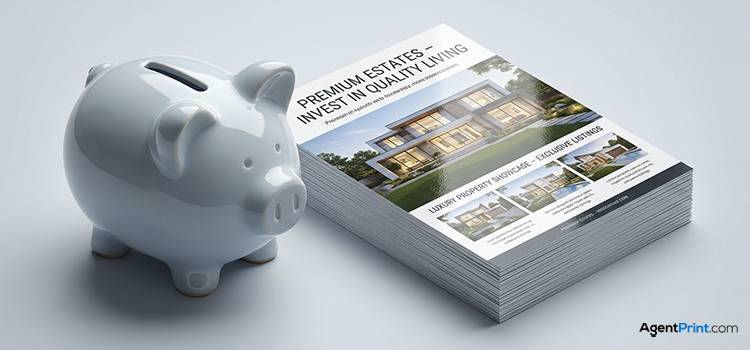
Did you know the most famous English saying about saving money (a penny saved is a penny earned) is attributed to a printer? Benjamin Franklin was a printer long before he became a founding father, and he’d probably be the first to relate to agents looking to slash printing costs. Still, saving money shouldn’t make you look cheap. You can cut printing costs while maintaining a premium brand by choosing standard sizes, ordering the right quantities, and using reusable signs and free design templates.
Contents
What “Cost-Effective” Really Means
In season five of The Office, Michael Scott leaves to start his own paper company, winning clients with such low prices they’re practically unbeatable. But there’s a catch: His team eventually realizes they are losing money on every single sale. This funny story highlights a very real business truth: the cheapest solutions aren’t always the smartest deals.
That is why cost-effectiveness is considered smarter than choosing cheaper solutions, as it usually leads to the highest return on your investment. For example, we saw an incredible campaign where an agent spent over $17,000 on integrated direct mail and digital ads, which sounds like a massive upfront expense, but it generated 10 new clients and $100,000 in commission revenue.
Spending a little more on premium finishes that actually win you listings or investing in more durable signage that will last longer is far smarter than buying cheap, flimsy marketing prints that are immediately thrown away or worn down before they can reach enough prospects.

Tips to Reduce Printing Costs Without Losing Quality
Most agents pay for their own marketing, so every dollar counts. While cheaper solutions may sound like the most straightforward way to reduce printing costs, they are not necessarily the most cost-effective, and in the long run, they may even lead to costlier reprints or worse, losing listings and prospects. To reduce printing costs, consider these factors instead:
Choose Standard Sizes
Printers use preset templates to cut standard-sized materials efficiently. When you order custom sizes or die-cut shapes, it requires specialized setups and unique cuts, which significantly increases your costs.
In real estate, sticking to standard sizes saves you money in two other ways as well:
- Postage: Non-standard mail sizes cost more to send. Both Canada Post and the USPS charge higher rates for oversized or oddly shaped items.
- Sign Hardware: Standard sign sizes (like a classic 18″x24″) perfectly fit standard H-stands, metal frames, and riders. This means you can reuse your hardware for years instead of having to buy custom metal frames for every new listing.
Order the Right Quantity
For cardstock prints, the price per piece drops as your order quantity increases, since setup costs are spread across more pieces. However, bulk order materials whose details won’t change soon, such as business cards (if contact details and brokerage are stable) or evergreen farming postcards and door hangers with general market updates or home valuation offers without dates.
One veteran agent shared the chaos of opening a new brokerage and having to reprint thousands of cards, flyers, and signs in the first 48 hours to replace their old branding. For listing-specific items like feature sheets and brochures, order closer to what you need, so you’re not left with outdated stock.
Match Paper to the Purpose
You don’t have to print everything on the thickest, most expensive paper available. Instead, save where it won’t be noticed, and invest where quality matters for first impressions.
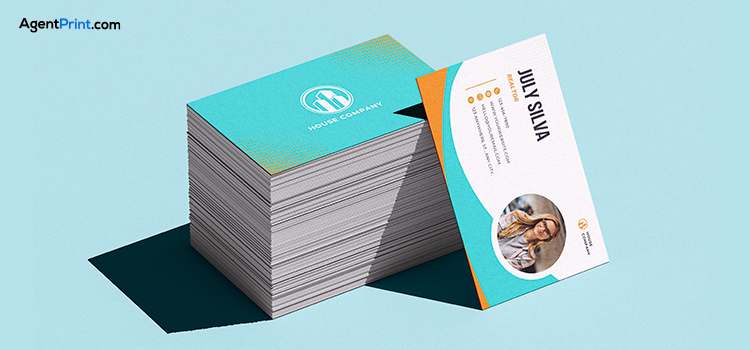
Use lighter, coated stock for your high-volume open house flyers (uncoated paper is great for writing on, but the print is slightly less vibrant and durable), but save your budget for heavier, premium stock on your business cards and direct mail postcards that you want your clients to keep. If you are unsure what to choose, read more about the best business card paper types for real estate agents.
Follow a Print-Ready Checklist
One great way to reduce printing costs is to ensure you never have to pay for a reprint. By following a solid pre-press checklist, you catch costly errors before production begins. We recommend you carefully read our comprehensive print-ready checklist for realtors for flawless printing, but to sum up, the most important steps include proofreading, setting up your files in CMYK for predictable, accurate colours, respecting the bleed and safe zones, always using high-resolution 300 DPI images and asking for a digital proof to review how your file will print before approving the final run.
Use Free Customizable Templates
Hiring a graphic designer removes a lot of headaches for realtors, but it can be expensive if you choose to do it for every single flyer or postcard. Instead, take advantage of free, customizable templates that keep your branding consistent across all your products.
Another money-saving tip while designing prints is to consider a double-sided team business card. If you work on a team, put your contact details on one side, and your partner’s on another. Since double-sided printing doesn’t cost extra, you effectively get two agents’ cards for the price of one print run.
Use Riders and Reusable Signs
Instead of printing separate signs for a new listing, an open house, a price reduction, and the final sale, simply invest in one high-quality, durable “For Sale” sign, and from there, just swap out inexpensive sign riders (like “Open House This Sunday” or “Just Sold”) on top or below your main sign. Reusing generic directional signs that don’t have listing-specific photos on them will save you hundreds of dollars over the course of a year.

Track Results
As one agent recently shared in a Texas REALTOR® magazine interview,
You should know where your money is going and whether it’s working.
Printing a QR code on the back of a business card or using a dedicated phone number shows which materials bring in leads, so you can stop spending on what isn’t working. Just make sure the QR code works perfectly, and it won’t expire after some time. As a pro tip, use a dynamic QR code so you can change the website destination later without having to reprint.
Plan Ahead
Planning ahead is just as critical for reducing costs as any other step in this guide. Rushing an order at the last minute means you get hit with expedited production fees and rush shipping costs. Build a timeline for your listings so you can order with standard turnaround times and keep that extra money in your pocket.
Ready to Print Smarter?
Slashing your printing costs doesn’t mean cutting corners; it means making strategic choices that save money while still making you look like a top-tier professional. At AgentPrint.com, we offer fully customizable templates that are easy to use and perfectly set up to follow the best printing practices and guidelines.
Ready to get started with cost-effective printing? Explore our free design templates and premium real estate marketing materials at AgentPrint.com today, and let us help you maximize your marketing budget.
Frequently Asked Questions
How can I save money on real estate printing without looking cheap?
The best way to save money without sacrificing quality is to be strategic: stick to standard sizes to avoid custom cutting fees, use heavy paper for important touchpoints like business cards, and use lighter coated paper for high-volume items like flyers. Always proofread carefully to avoid the cost of reprinting and track your results so you can stop spending on what isn’t working.
Should I buy real estate marketing materials in bulk?
It depends on the item. Buying in bulk lowers the cost per piece, so it is highly recommended for items that you’re sure won’t change soon, such as business cards or evergreen farming postcards. For items that might change, order smaller runs so you won’t waste money on outdated stock.
For items that aren’t offered in bulk, such as signage, invest in generic, durable signs that can be reused and repurposed with riders.
Why does standard sizing save money on printing?
Printers use standard templates and paper sheets to cut standard-sized materials efficiently. Custom sizes require specialized setups and die-cuts, which take more time and increase the production cost. Additionally, standard sizes save you money on postage and ensure your signs fit nicely into standard reusable hardware.